

From age 12 until I was 22, I worked with my dad in the construction business.
I began by cleaning up behind adult workers on weekends and during the long, hot Florida summers. By age 15 I was a part of the carpentry crew and by 19 I had built a home under contract. At 20 I built my own home.
After another five or six more years of building homes and commercial structures, I decided it was time for a change. I became a cabinetmaker and eventually operated my own woodworking shop for more than 25 years.
I always enjoyed sharing what I learned, so I often welcomed visitors to my shop.
One day a local woodworking club asked if they could hold a meeting there while I demonstrated some of my techniques. I was glad to accommodate them.
During the demonstration, I showed how I assembled cabinet drawers using nails.
One member was visibly upset.
He believed drawers should be assembled only with traditional woodworking joints. He was equally critical of some of the cabinet construction methods I used every day in my shop.
I always try to explain why I do things a certain way, but some people simply can’t accept methods that fall outside of their own experience.
The interesting part is that my methods worked.
During more than 25 years of building cabinets professionally, I never received a complaint about a drawer falling apart. In fact, there are drawers in my own home assembled with nails more than 25 years ago that have never needed repair.
Because I enjoy writing as much as woodworking, I’ve written several books describing the techniques I used in my shop.
One of them, originally published as a paperback in 2013 and now available as a PDF eBook, explains my favorite woodworking assembly method using biscuit joinery.
More recently I wrote I wrote “Nailed It!, a PDF eBook describing how I build cabinet drawers using nails. A photo of both book covers appears below.
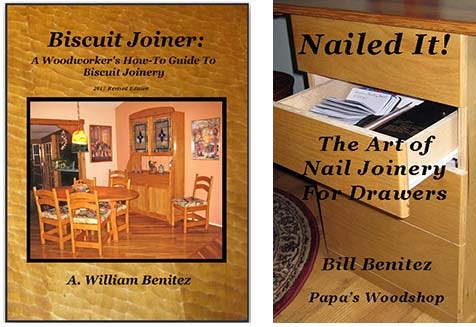
Two different assembly methods. Two books based on techniques I used successfully for more than 25 years.
People often assume that if a method isn’t traditional, it must be inferior.
I’ve seen that assumption in woodworking.
I’ve also seen it in publishing.
The resistance to nailed drawer construction reminds me of the resistance many have toward PDF eBooks. In both cases, opinions are often formed before the results are examined.
I’ve always preferred to judge a method by how well it works rather than by whether it’s considered traditional.
Sometimes the best ideas aren’t the newest.
They’re simply the ones that prove themselves over time.
Interested in practical woodworking?
These two PDF eBooks and my other woodworking titles are available in my Gumroad woodworking collection at Bill’s How-To Books Library.
Thank you for reading. If this story resonated with you, I’d love to hear your thoughts in the comments. And if you know someone who might enjoy it, please consider sharing it.